














Philippine Ambassador Participates in Panel on Women, Peace and Security in Southeast Asia at United Nations University in Tokyo
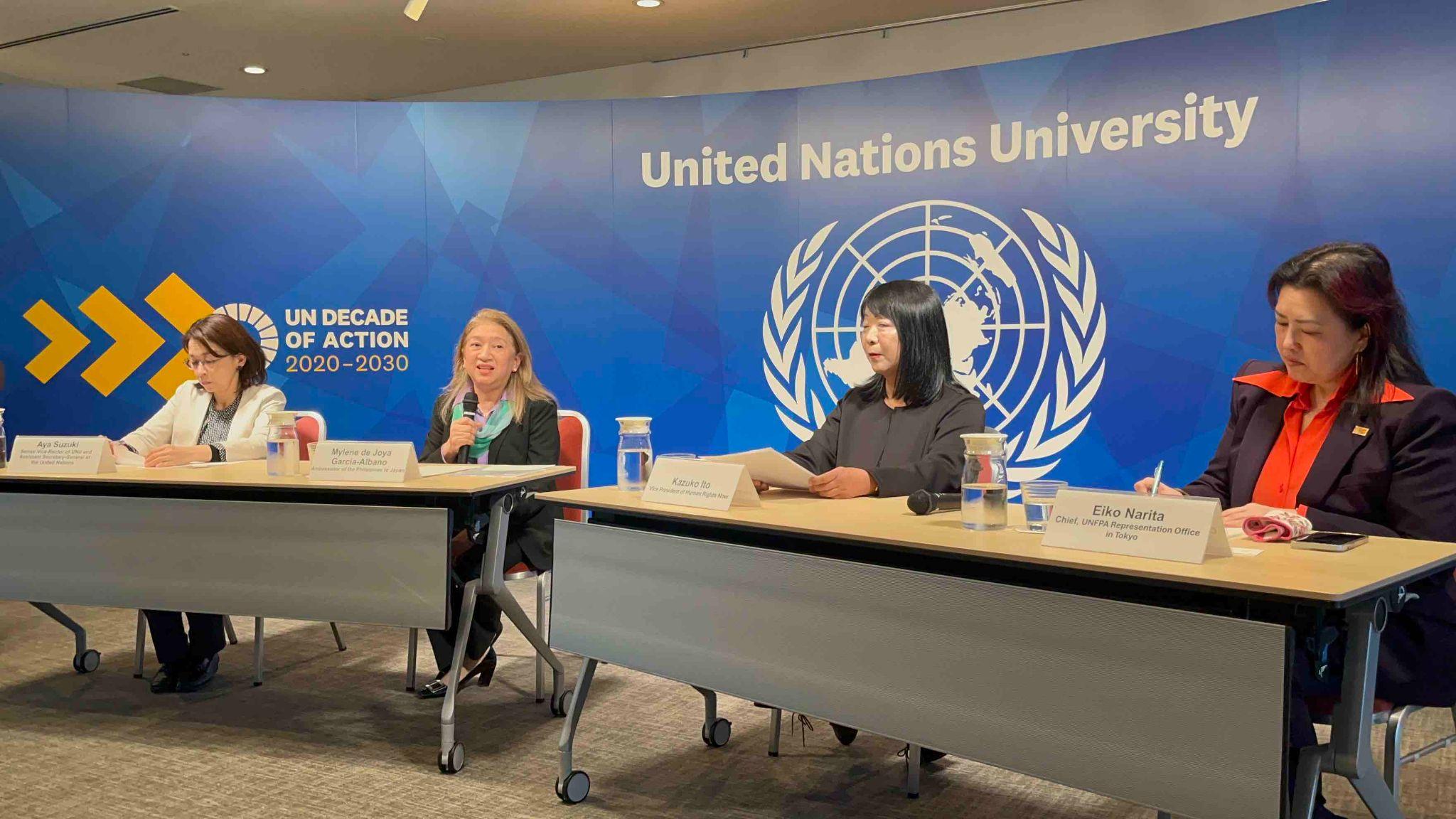
Philippine Ambassador to Japan Mylene J. Garcia-Albano (2nd from left) serves as a panelist in the discussion entitled, “Women, Peace and Security in South-East Asia: From Global Commitments to Local Action,” held as part of the Tokyo Women Citizens Dialogue Series at the United Nations University in Tokyo on 11 March 2026.
TOKYO, 17 March 2026 – Philippine Ambassador to Japan Mylene J. Garcia-Albano participated in the panel discussion “Women, Peace and Security in South-East Asia: From Global Commitments to Local Action,” held at the headquarters of the United Nations University (UNU) in Tokyo on 11 March 2026, as part of the Tokyo Women Citizen Dialogue Series. The discussion was particularly timely as the Philippines marks National Women’s Month in March, a nationwide celebration recognizing the vital contributions of Filipino women to nation-building, peace, and development.
The event was co-hosted by United Nations University and Guardian Girls International, in partnership with the Koyamada International Foundation Japan and Guardian Girls Japan, with support from rYojbaba. The panel gathered policymakers, advocates, and experts to discuss how global commitments on the Women, Peace and Security (WPS) agenda can be translated into meaningful action at the community level across Southeast Asia.
In her remarks, the Ambassador underscored the Philippines’ strong commitment to advancing the WPS agenda, emphasizing that women’s meaningful participation strengthens peace processes and contributes to more inclusive and sustainable security outcomes.
“What women bring to the table is a broader understanding of peace and security. The conversation moves beyond simply stopping the violence. It expands to questions of human security, such as how communities rebuild, how trust is restored, and how institutions can support dignity, opportunity, and inclusion. These are the foundations of lasting peace,” the Ambassador said.
Ambassador Garcia-Albano also highlighted the Philippines’ leadership in advancing the WPS agenda, noting that the country was among the first in Asia to adopt a National Action Plan on Women, Peace and Security following the adoption of United Nations Security Council Resolution 1325. Through successive National Action Plans, the Philippines has promoted women’s participation in peace negotiations, conflict prevention, humanitarian response, and post-conflict recovery, while integrating gender perspectives across security and governance institutions.
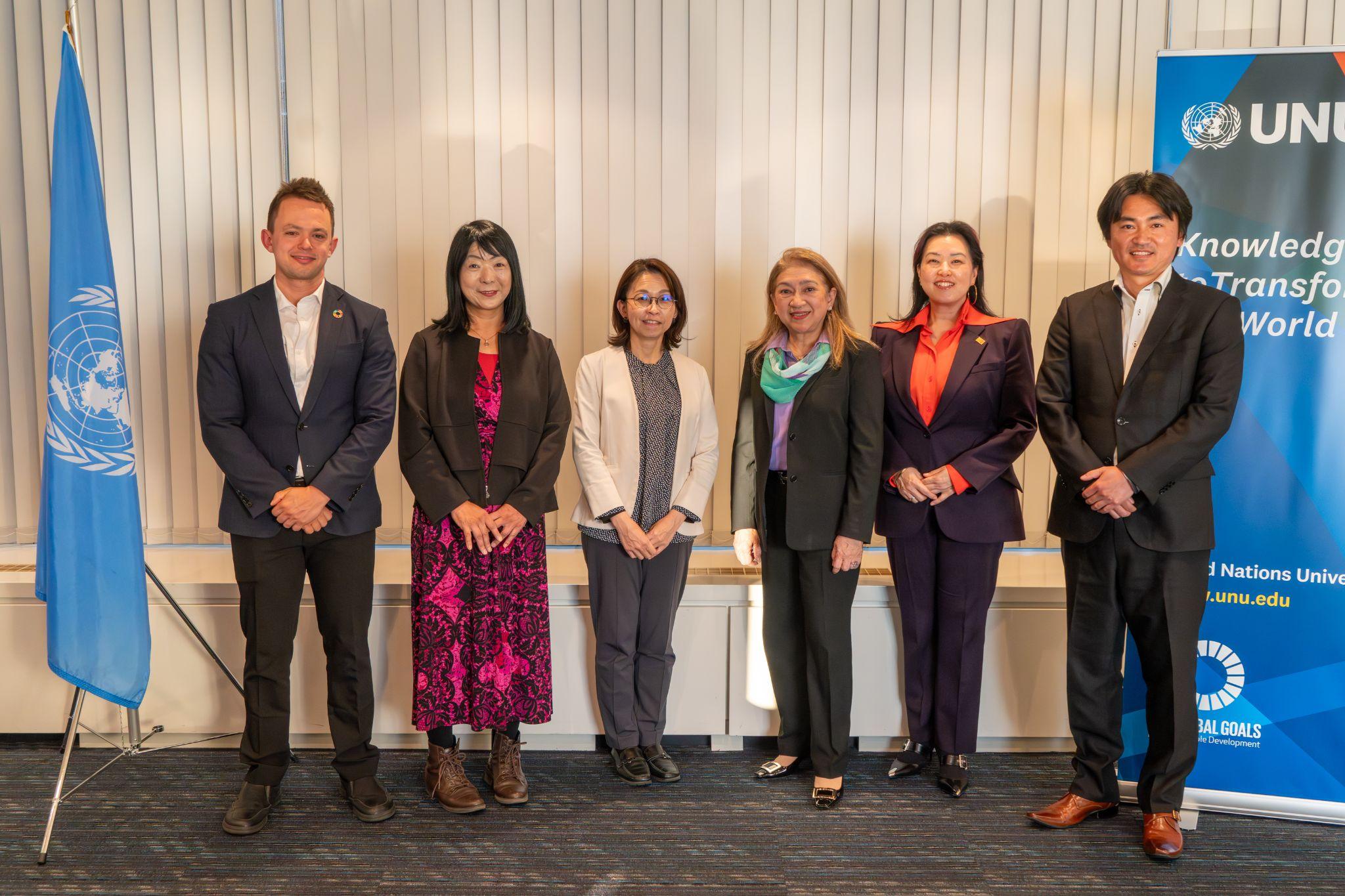
Philippine Ambassador to Japan Mylene J. Garcia-Albano (3rd from left) with panelists and speakers of the Tokyo Women Citizens Dialogue Series discussion, “Women, Peace and Security in South-East Asia: From Global Commitments to Local Action,” held at the United Nations University in Tokyo on 11 March 2026 Also in the photo are (L-R) Mr. Nicolas du Bois, Programme Officer, Office of the UNU Rector; Ms. Kazuko ITO, Vice President, Human Rights Now; Dr. Aya Suzuki, UNU Senior Vice-Rector and UN Assistant Secretary-General; Ms. Eiko NARITA, Chief, UNFPA Representative Office in Japan; and Mr. Shin KOYAMADA, Secretary General, Guardian Girls International. (Photo: UNU).
Ambassador Garcia-Albano likewise cited the landmark role of Prof. Miriam Coronel-Ferrer, who made history as the first woman in the world to serve as chief negotiator in a major peace agreement, leading the Philippine government panel that successfully concluded the 2014 Comprehensive Agreement on the Bangsamoro with the Moro Islamic Liberation Front.
Speaking on the importance of localization in implementing the WPS agenda, Ambassador Garcia-Albano emphasized that translating global commitments into tangible outcomes requires the active involvement of communities.
“Regional policies and international commitments are important because they set direction and standards. But for these commitments to truly translate into action, communities must feel that they are not just recipients of policies, but active partners in shaping them,” she remarked.


