












Philippines-Japan 70th Anniversary Opens With Landmark Philippine Coconut Exhibition
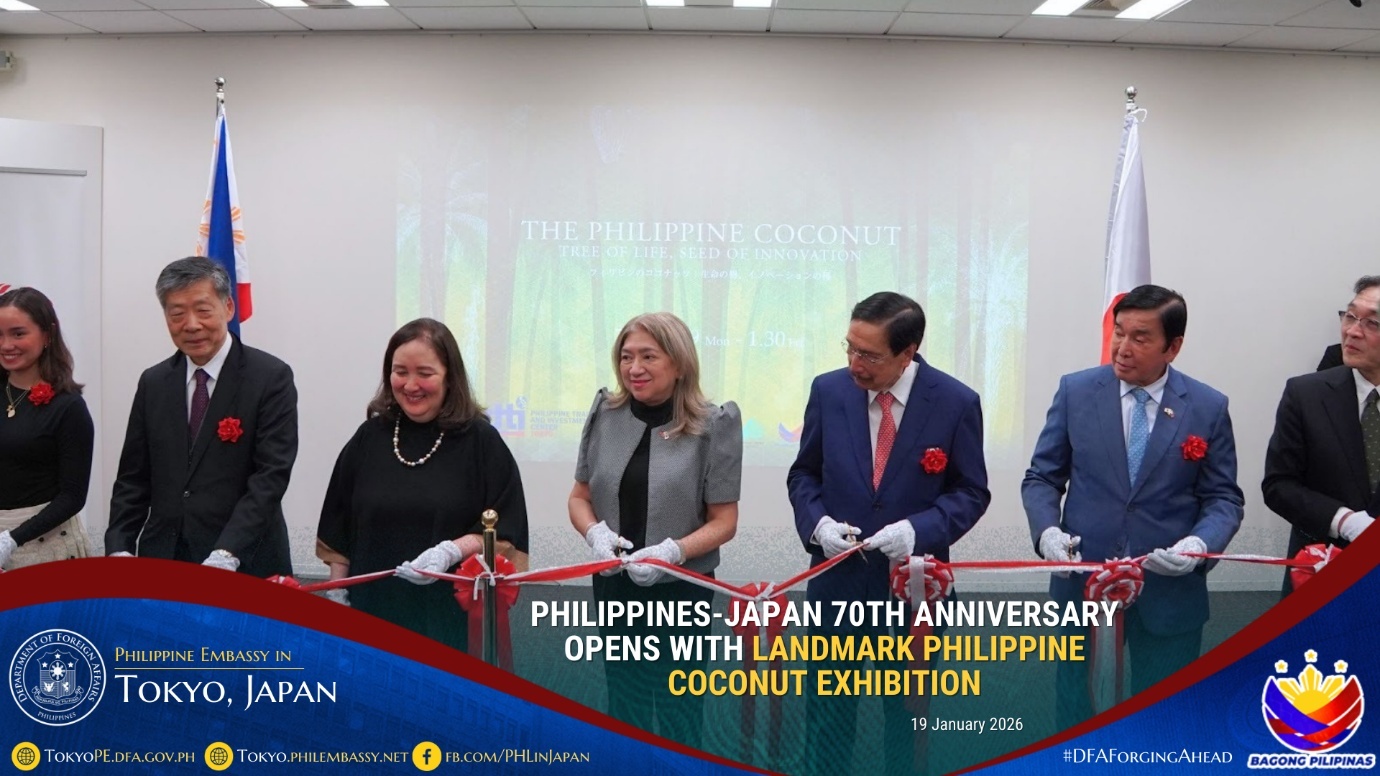
Philippine Ambassador to Japan Mylene J. Garcia-Albano (4th from left), Special Envoy Amable R. Aguiluz V (3rd from right), Special Envoy Reghis M. Romero II (2nd from right), Commercial Counsellor Dita Angara-Mathay (3rd from left), and ASEAN-Japan Centre (AJC) Secretary General Kunihiko Hirabayashi (rightmost), Japan Institute for Design Promotion President Hiroyuki Fukano, and Tukod Foundation President Isabella Mañosa-Tanjutco lead the ribbon-cutting ceremony of “The Philippine Coconut” exhibition at the Tokyo Midtown Design Hub.
TOKYO, 23 January 2026 – The Philippines officially commenced the year-long celebration of the 70th Anniversary of the Normalization of Philippines-Japan Diplomatic Relations with the opening of “The Philippine Coconut: Tree of Life, Seed of Innovation” exhibition on 19 January 2026 at the Tokyo Midtown Design Hub in Minato City.
The exhibition was organized by the Department of Trade and Industry (DTI) through the Philippine Trade and Investment Center (PTIC)–Tokyo and funded under the Coconut Farmers and Industry Development Plan (CFIDP) pursuant to Republic Act No. 11524, with the Philippine Embassy in Japan as a major partner, and with the support of the ASEAN–Japan Centre (AJC) and the Japan Institute for Design Promotion. The exhibition’s opening ceremony was attended by more than 200 guests from the diplomatic corps, the Philippine and Japanese governments, business groups and investors, media, and the creative sector.
Attendance included ambassadors and members of the diplomatic corps, C-level or top executives and senior representatives of major Japanese trading companies and prospective investors in the Philippine coconut sector, as well as senior officials from key Japanese government ministries and agencies, including the Ministry of Economy, Trade and Industry (METI), the Ministry of Agriculture, Forestry and Fisheries (MAFF), the Ministry of Land, Infrastructure, Transport and Tourism (MLIT), the Japan External Trade Organization (JETRO), and the Organization for Small & Medium Enterprises and Regional Innovation, Japan (SMRJ).
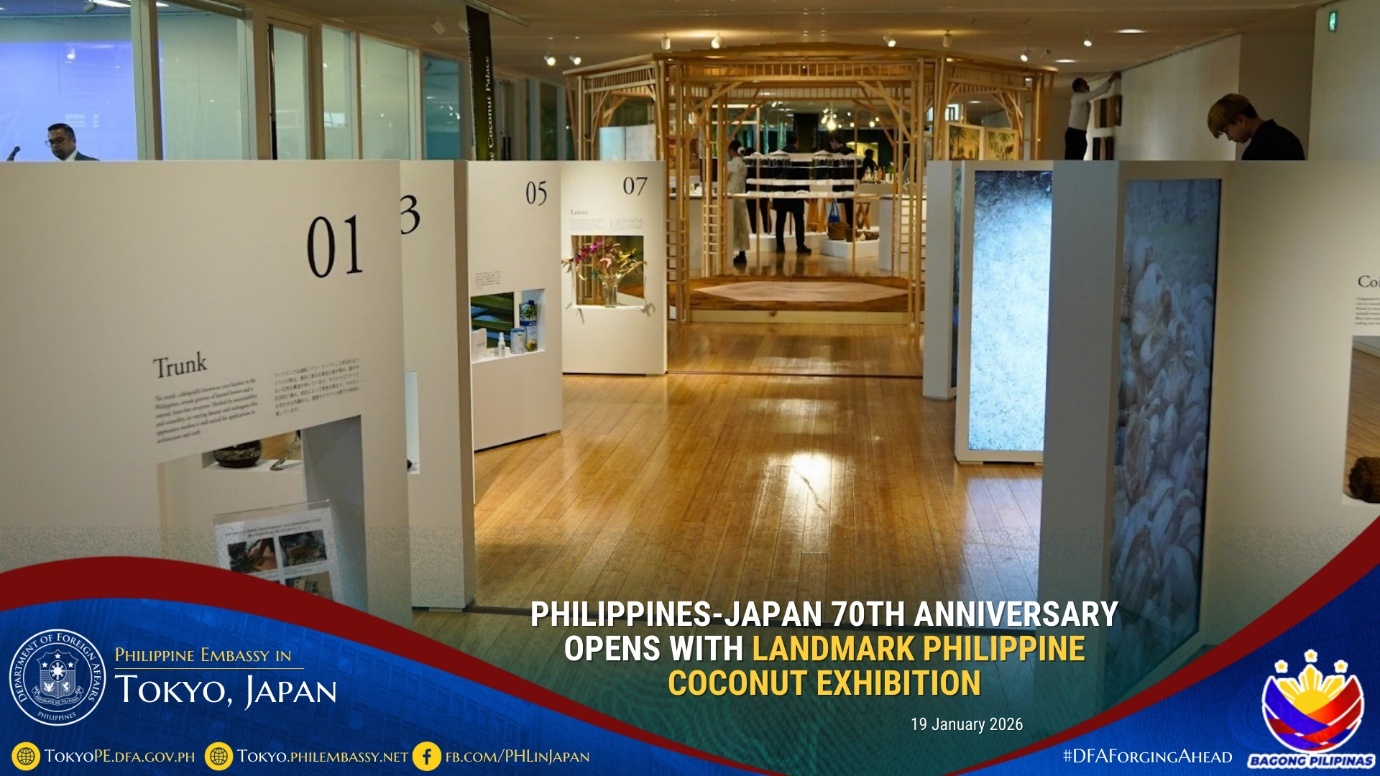
“The Philippine Coconut” exhibition showcases the coconut and its multifaceted application in architecture, design, food, wellness, life sciences, and climate resilient infrastructure.
“This exhibition serves as the official kick-off event for the 70th Anniversary of the Normalization of Diplomatic Relations between the Philippines and Japan and reflects our anniversary theme, ‘Weaving the Future Together: Peace, Prosperity, Possibilities.’ It highlights how our two countries continue to work together guided by shared values of sustainability, creativity, and innovation,” Philippine Ambassador to Japan Mylene J. Garcia-Albano said in her welcome remarks at the exhibition’s opening.
Ambassador Garcia-Albano noted that the exhibition’s focus on the coconut exemplifies the principles of a circular economy that promotes harmony with nature and contributes to inclusive prosperity – a philosophy that is shared by the Philippines and Japan throughout their 70-year friendship.
“In the Philippines, the coconut is known as the ‘Tree of Life’ because every part of the tree can be used. From the roots and leaves to the husk, shell, water, and oil, nothing goes to waste. Each part is transformed into food, materials, energy, and livelihoods,” she said.
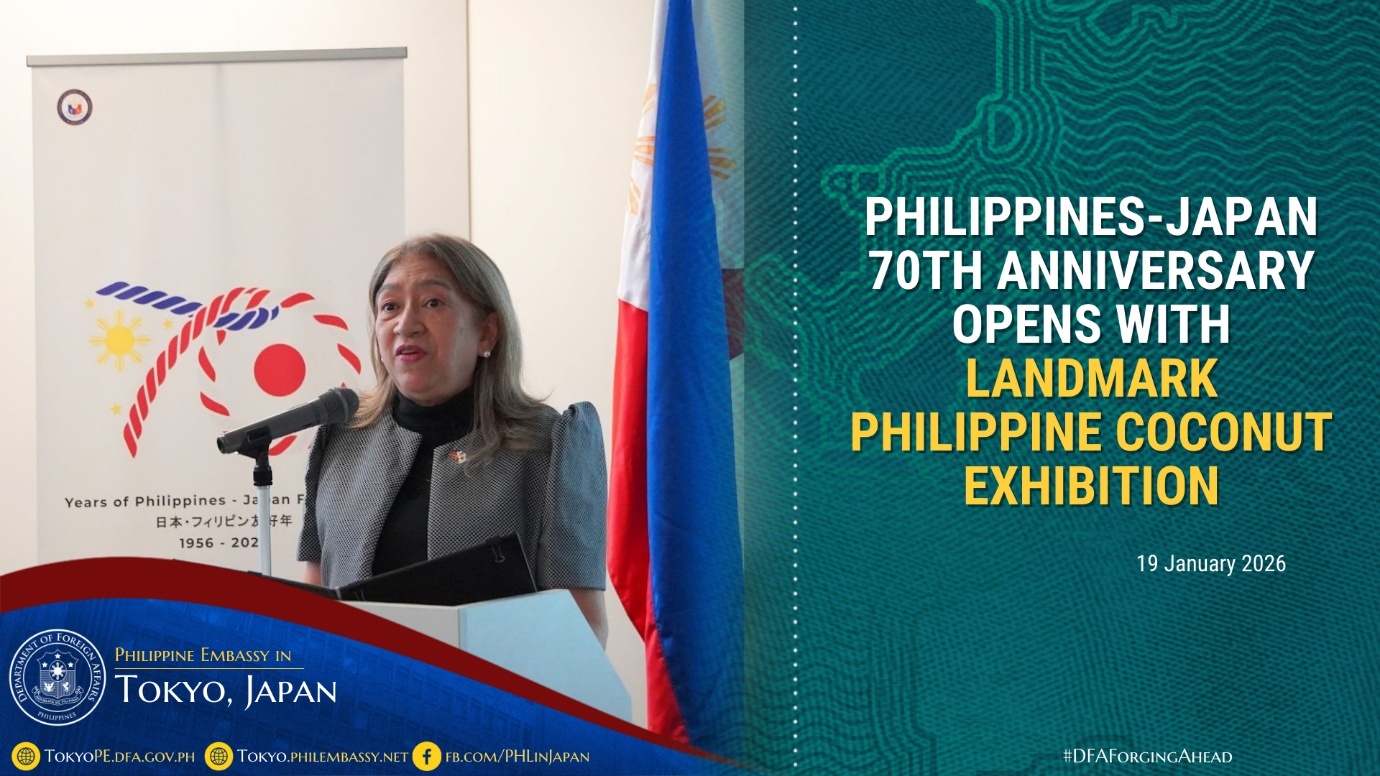
Ambassador Garcia-Albano delivers her welcome remarks.
The exhibition presents the coconut from a traditional commodity into a strategic, high-value material with applications in architecture, design, food, wellness, life sciences, and climate-resilient infrastructure, curated with the support of Salcedo Auctions.
In his message, Special Envoy to Japan for Trade and Investments Amable R. Aguiluz V highlighted the complementarity between Japan’s technological expertise and the Philippines’ abundance in coconut resources as demonstrated in the exhibition, linking the two countries in a high-demand global economy. “These are global products. They are designed for international markets and ready to integrate with Japanese technology, Japanese capital, and Japanese standards of excellence,” he said.
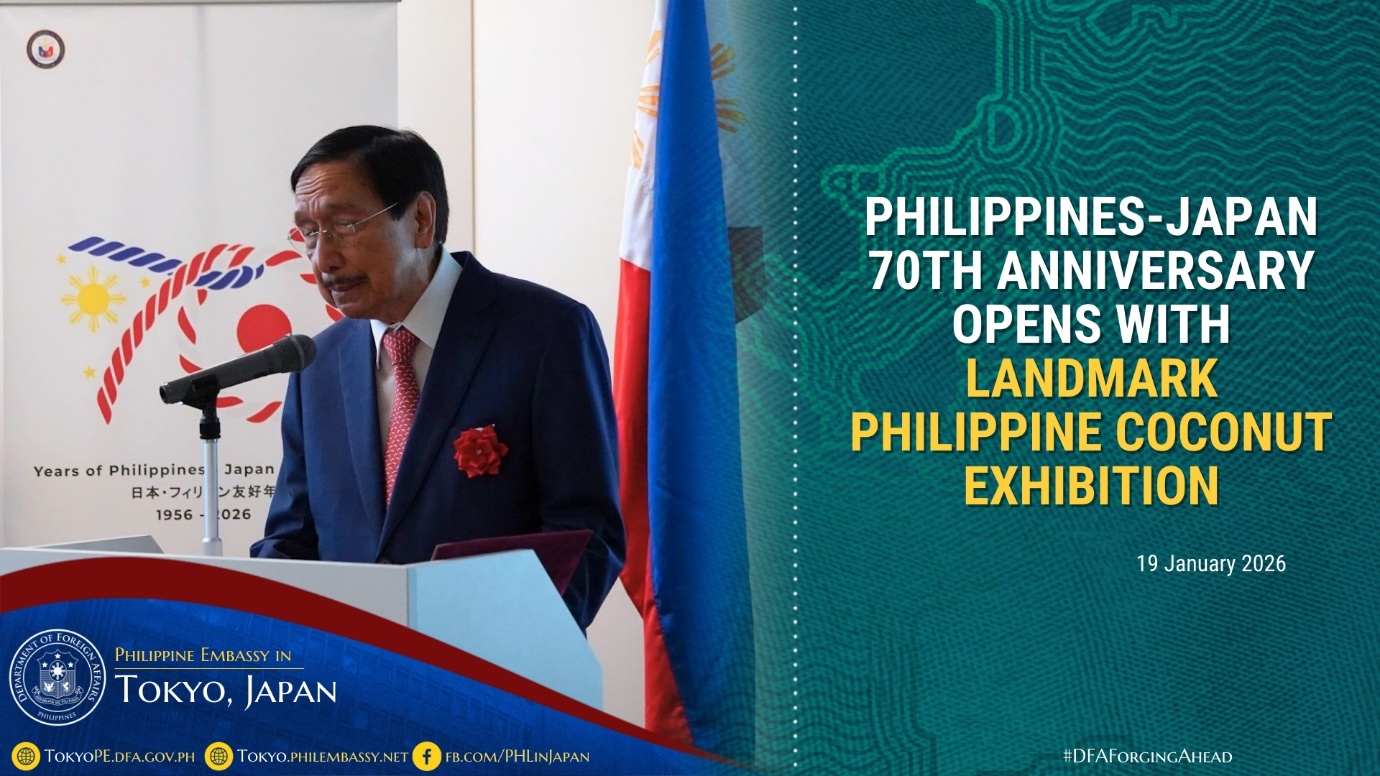
Special Envoy Aguiluz delivers his message.
The exhibition delivers an immersive multimedia experience incorporating the anatomy of the coconut and its diverse byproducts, ranging from medicinal and wellness products to coconut coir geotextiles used for flood and erosion control. It also includes a visual art section featuring contemporary Filipino artists, alongside a curated showcase of coconut-based products developed by Philippine micro, small, and medium enterprises (MSMEs).
Commercial Counsellor Dita Angara-Mathay, Head of PTIC-Tokyo shared that the exhibition positions the coconut at a strategic intersection of culture, policy, design, and global cooperation. “For the Philippines, the coconut’s role as both a heritage symbol and a catalyst for inclusive, innovation-led growth is significant. It is a sector that supports over 3.5 million coconut farmers, with millions more benefiting across the value chain,” she said.
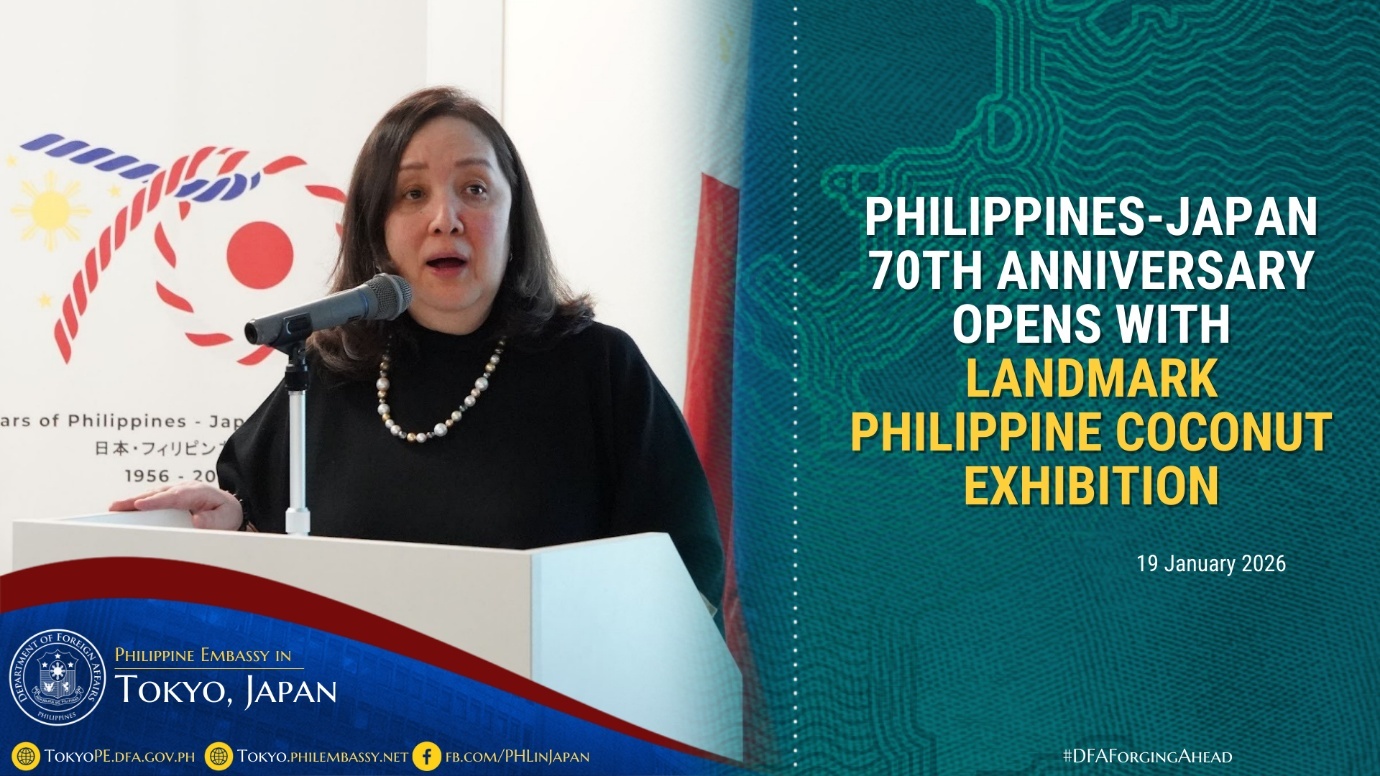
Commercial Counsellor Dita Angara-Mathay delivers the rationale and narrative of “The Philippine Coconut” exhibition.
In partnership with the Tukod Foundation, the exhibition pays tribute to the late National Artist for Architecture Francisco Mañosa by showcasing a rare glimpse of his iconic creation, the Coconut Palace, through a pavilion inspired by the palace’s design decorated with tactile coconut-based interiors, and an intricate diorama of the palace’s floors. The section also features a virtual reality (VR) walkthrough of the palace’s grand halls attesting to the boundless possibilities of the coconut.
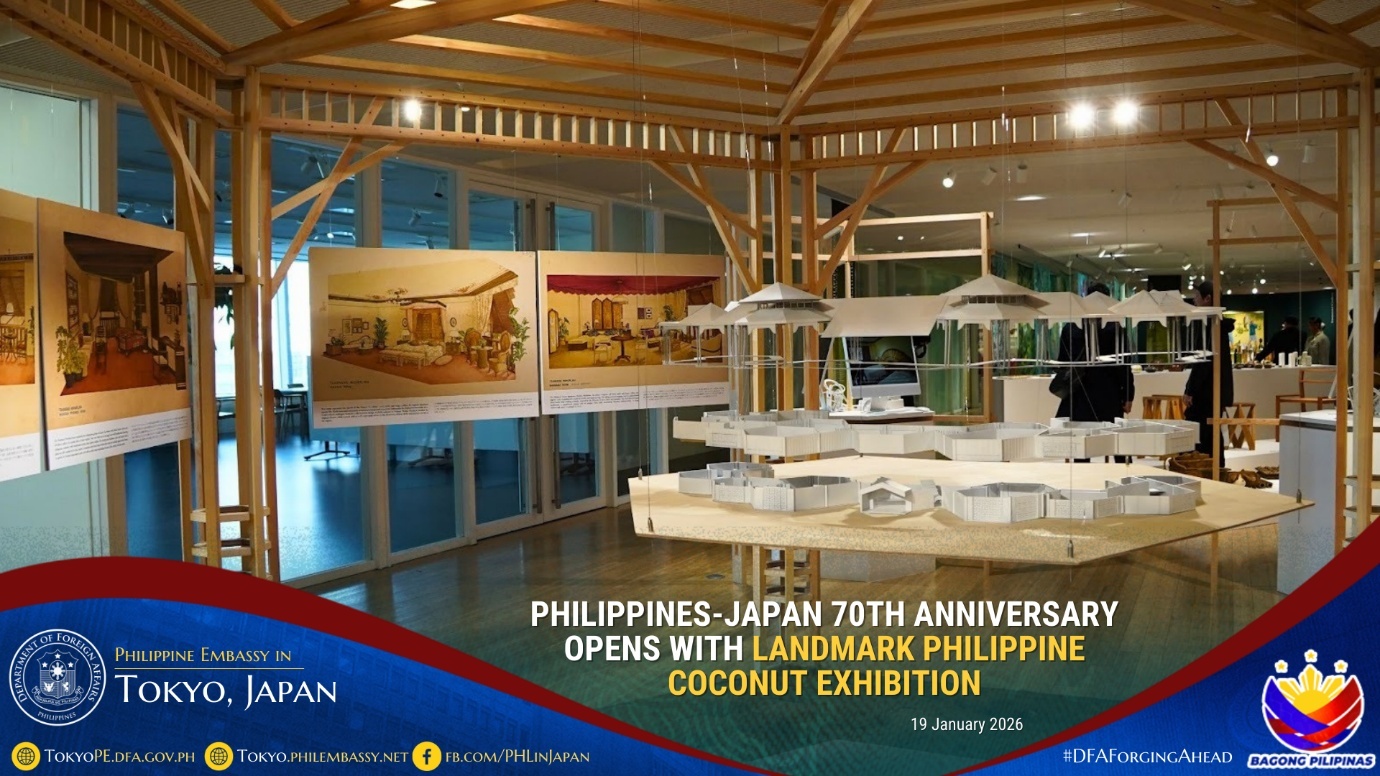
“The Philippine Coconut” exhibition’s pavilion inspired by the Coconut Palace.
“We are truly cracking the nut—and we are confident that even greater opportunities lie ahead. This is the strength of partnership: working together toward a shared future that makes seventy years of friendship not just enduring, but genuinely meaningful,” Special Envoy to Japan for Business and Investment Promotion Reghis M. Romero II said in his message.
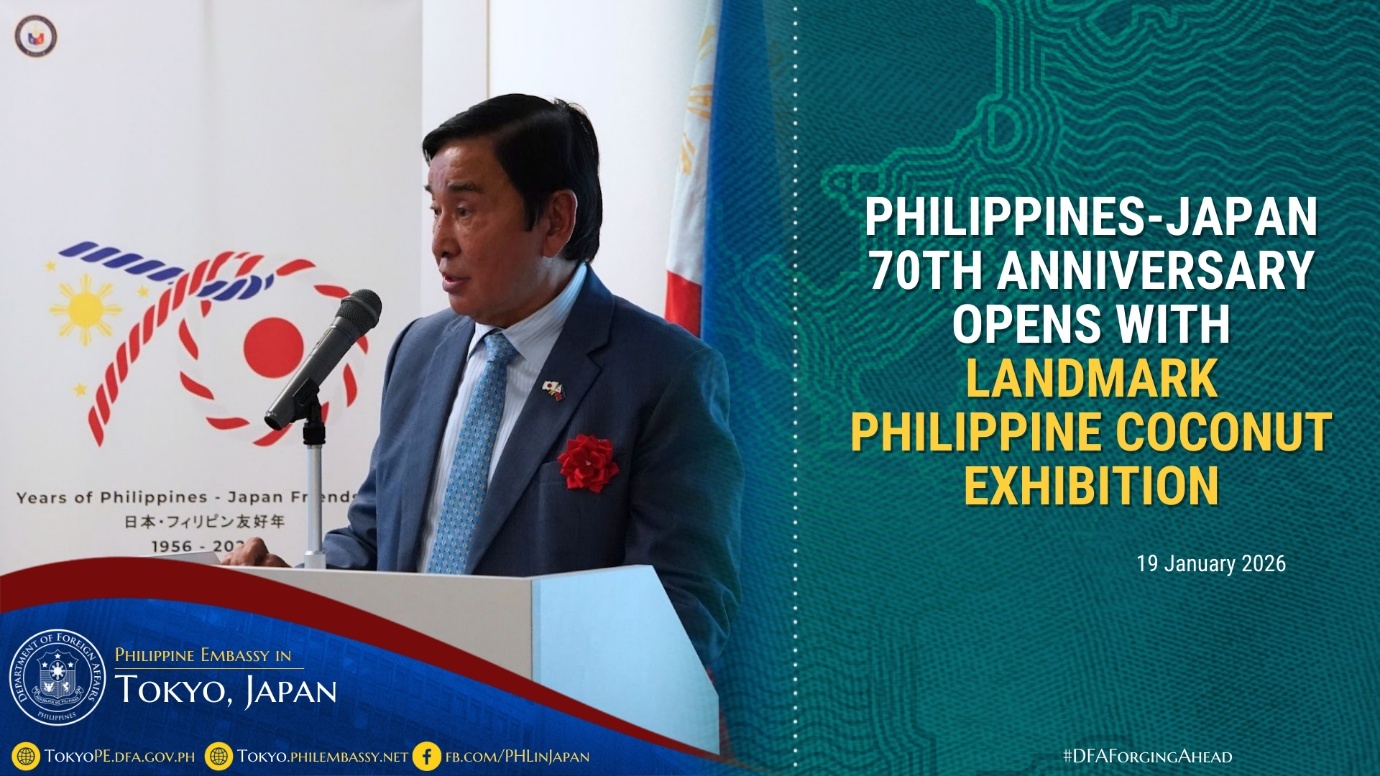
Special Envoy Romero delivers his message.
Guests at the exhibition’s opening ceremony were treated to fresh coconut water and Philippine delicacies with coconut ingredients. Ms. Maria Theresa Gow and the Tokyo Chorale Society provided lively musical performances of traditional Filipino and Japanese songs.
AJC Secretary General Kunihiko Hirabayashi commended the Philippines for mounting a landmark exhibition, noting that it was a fitting opening event for the Philippines-Japan 70th anniversary celebration.
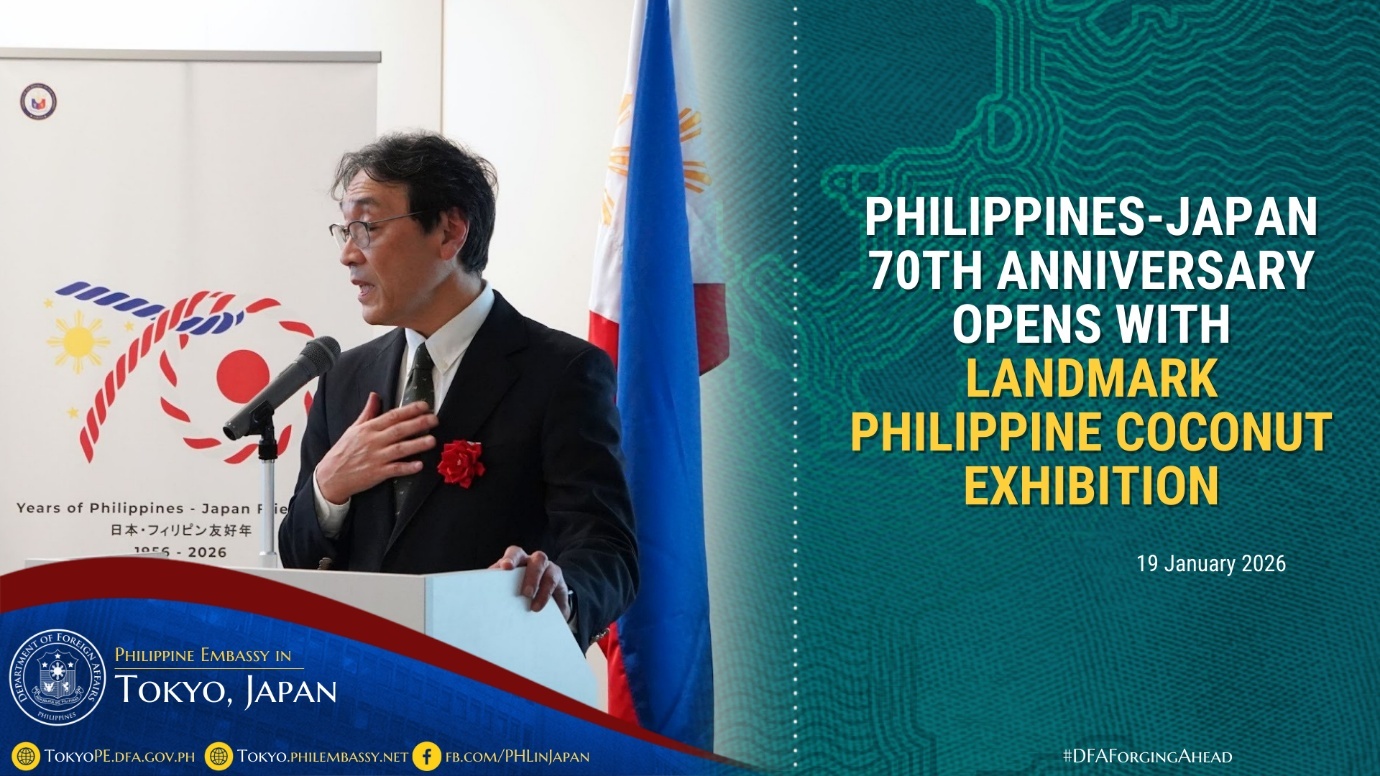
AJC Secretary General Hirabayashi delivers his message.
The exhibition is directly linked to the Philippines’ Coconut Farmers and Industry Development Plan (CFIDP) under Republic Act No. 11524, which prioritizes downstream processing, material innovation, MSME development, and global market integration.
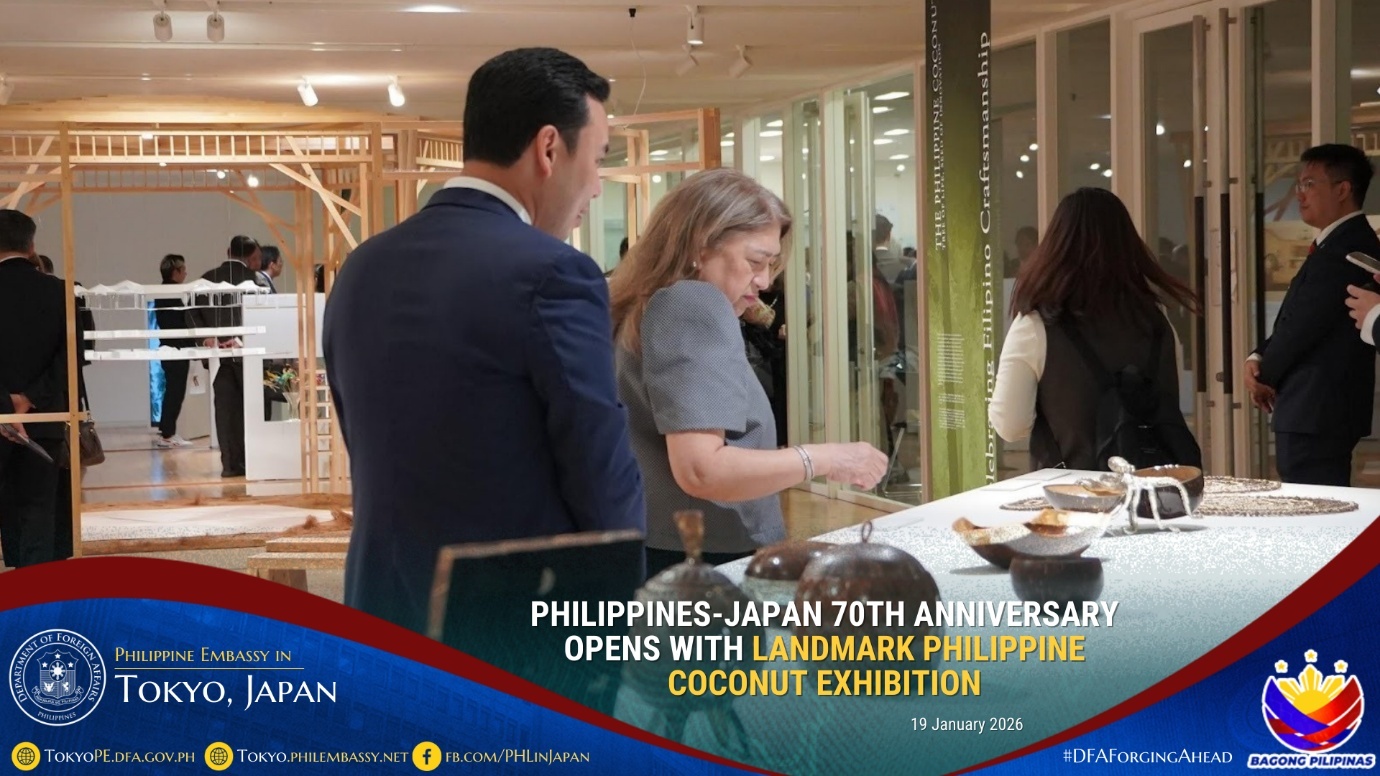
Ambassador Garcia-Albano admires the featured coconut-based crafts at the exhibition.
The Philippine Coconut exhibition is open to the public for free at the 5th floor of Tokyo Midtown Design Hub from 11:00 AM to 7:00 PM until 30 January 2026.


